



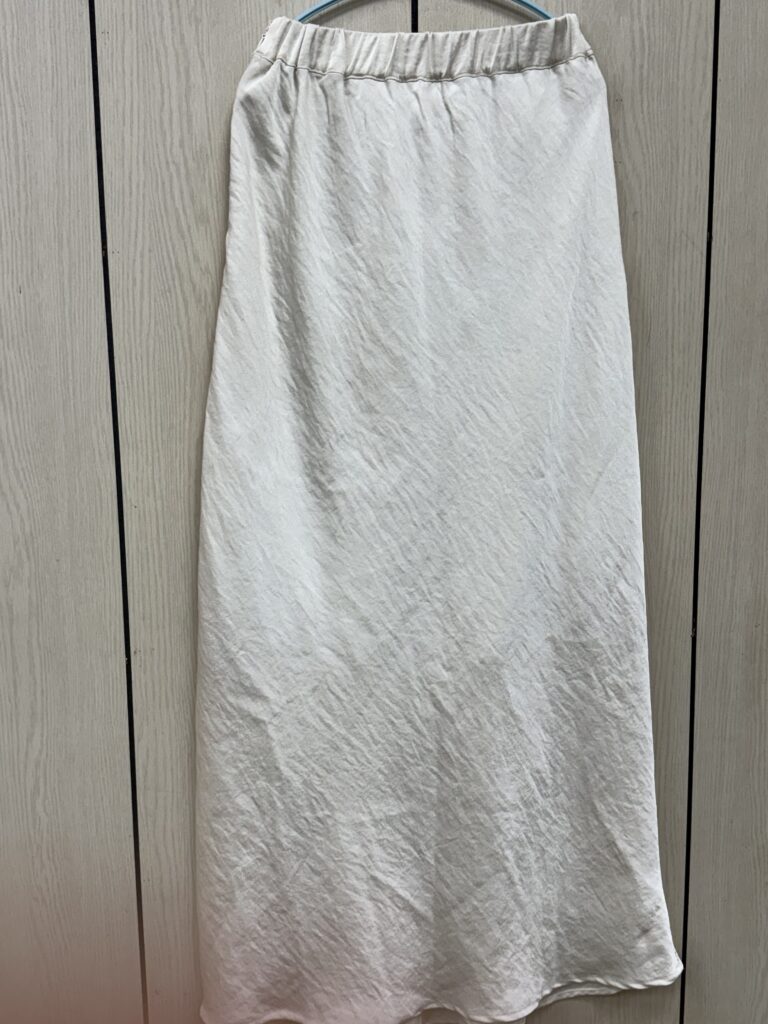
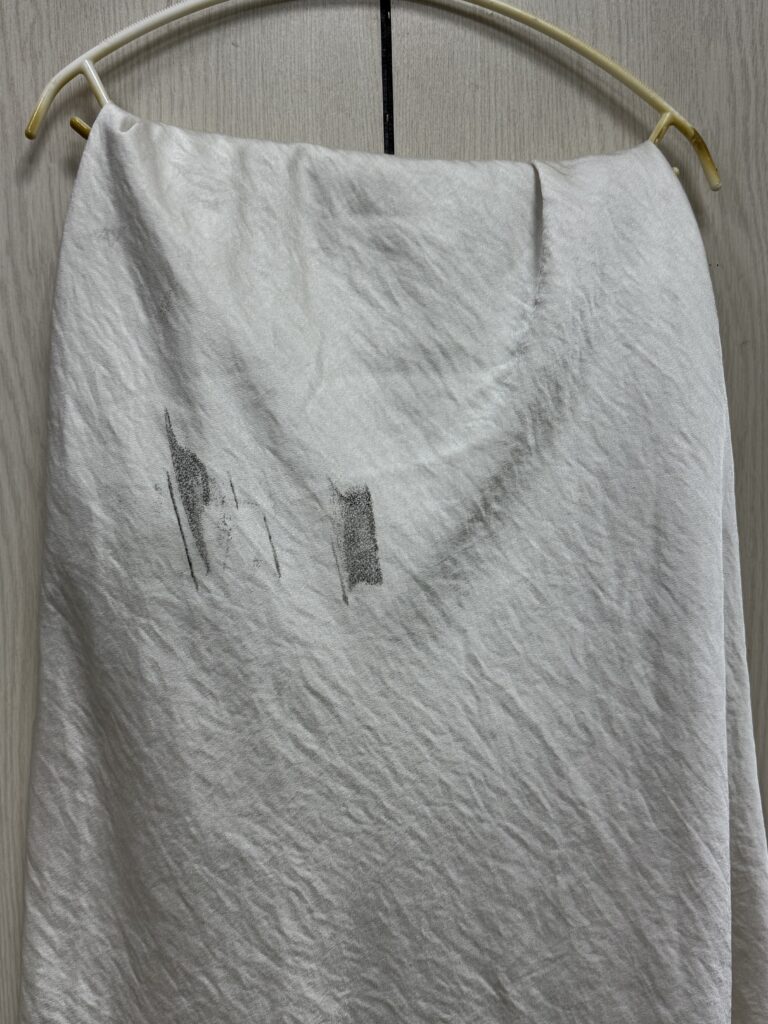
🧵 Why does dye transfer occur on light-colored skirts?
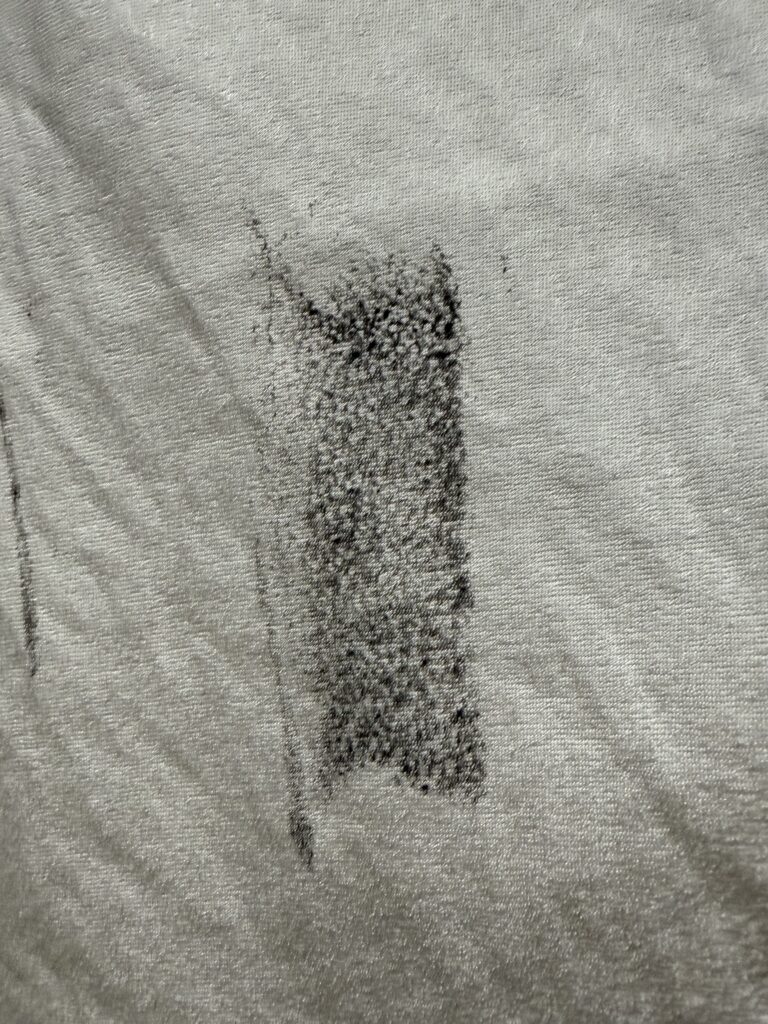
Based on the photos, this is not ordinary dirt but a typical case of dye transfer caused by friction combined with fiber absorption.
Common causes include:
- Friction with dark-colored bags, belts, or jackets
- Dye bleeding from leather or fabric in humid or sweaty conditions
- Light-colored fabrics with open fibers that easily absorb loose dye
- Lack of anti–dye transfer protection before wearing
Once dye penetrates into the fibers, normal washing methods will not remove it.
🧰 Professional Dye Transfer Repair Process
1️⃣ Fabric Testing & Evaluation
Before treatment, a colorfastness test is performed to ensure the skirt’s original dye will not bleed during repair.
Tools & Materials:
- Neutral testing solution
- White cotton swabs / test cloth
2️⃣ Dye Transfer Breakdown
A professional dye transfer remover is applied to dissolve and release the transferred dark dye from within the fibers.
Chemical Materials:
- Dye Transfer Remover
- Low-volatility solvent assistant
Tools:
- Soft textile brush
- Fine sponge
- Low-temperature heat plate
⚠️ The process is done gradually to avoid fiber damage.
3️⃣ Fiber Neutralization & Stabilization
After dye removal, fibers remain open and vulnerable. A neutralizing step is required to stabilize the fabric and prevent re-absorption.
Chemical Materials:
- Fiber Neutralizer
- Mild acidic stabilizing solution (pH 5.0–5.5)
4️⃣ Tone Balancing & Visual Correction
If light shadows remain, a tone-balancing process is used to even out the appearance without re-dyeing the fabric.
Materials & Tools:
- Textile Tone Corrector
- Micro spray or fine brush
5️⃣ Anti–Dye Transfer Protection
A final protective coating is applied to reduce future dye transfer risk.
Protective Materials:
- Anti-Dye Transfer Coating
- Textile Protector
✔ Reduces dye absorption
✔ Maintains softness and drape
✔ Does not affect breathability
🧴 Daily Prevention Tips
- Avoid long-term friction with dark-colored accessories
- Be cautious in humid or sweaty conditions
- Apply anti-dye transfer protection before first wear
- Treat stains early for the best recovery results
📌 Conclusion
Dark marks on light-colored skirts are often caused by dye transfer, not dirt.
With the correct professional process:
Dye breakdown → Fiber neutralization → Tone balancing → Protective coating
The fabric can be significantly restored, often close to its original condition.
If fabric type or dye behavior is uncertain, professional handling is strongly recommended.
Share